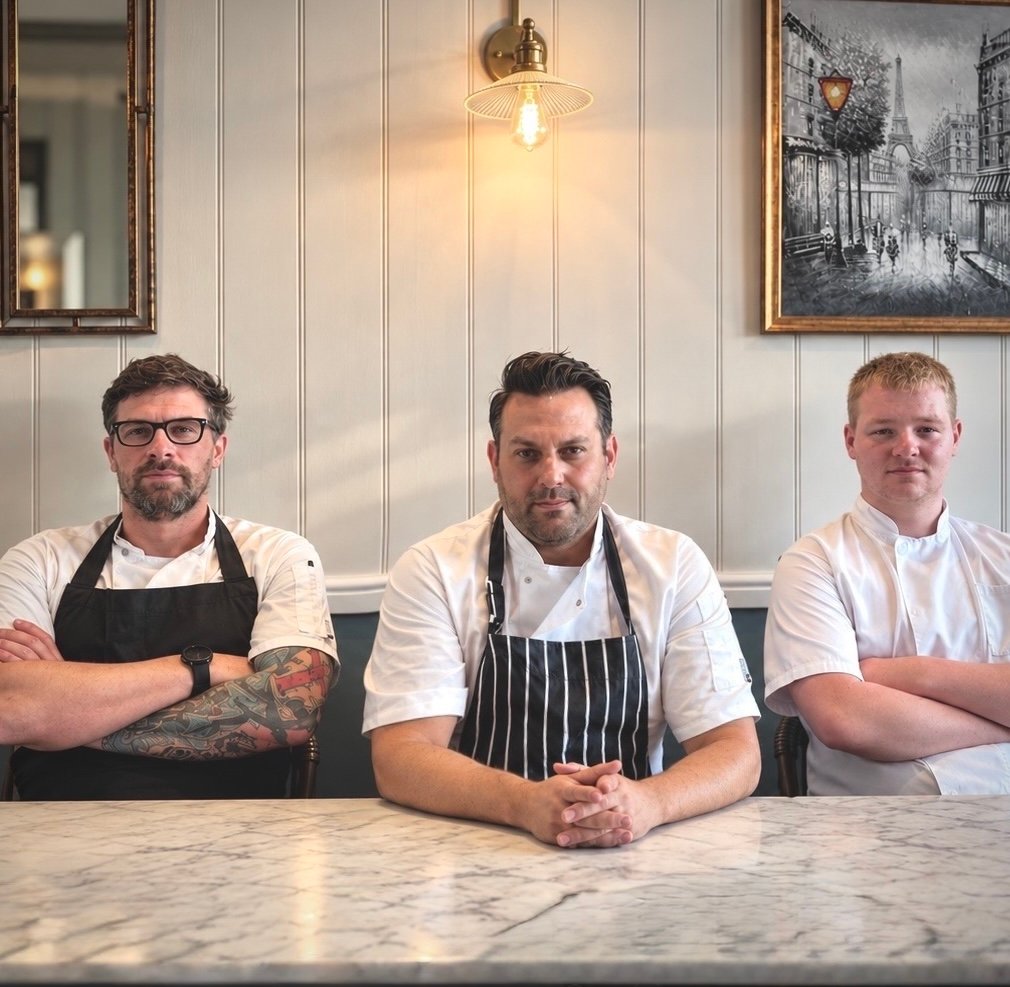
A life in British kitchens and a family legacy of quiet influence.
When British chefs were asked which people had quietly influenced their industry, one name kept coming up: Bradley Green. For the London-born chef and restaurateur, recognition has often come from those who understand the work most intimately. His reputation lives in kitchens, in the standards he established and in the chefs who carried those lessons into their own careers.
It is a familiar pattern in the Green family. His father, legendary British guitarist Mick Green, spent much of his life better known within his profession than beyond it. Musicians understood the significance of his playing, even when audiences were more familiar with the stars beside him.
Los Angeles provided a memorable stage for that influence. In 1999, Paul McCartney brought Mick Green to Hollywood to perform at PETA’s Party of the Century at Paramount Studios. Joining them onstage were Pink Floyd’s David Gilmour and Deep Purple drummer Ian Paice.
Green’s unusual ability to play rhythm and lead guitar simultaneously had already helped shape a generation of British musicians. Pete Townshend admired him, Wilko Johnson studied him obsessively, and McCartney described him as “one of the original rock heroes.” His standing rested on his craft and on what other musicians learned from it.
For Bradley Green, a similar story has unfolded through more than 25 years in British kitchens.
He emerged from the famously unforgiving London restaurant culture surrounding Marco Pierre White in the early 2000s, an environment where precision mattered and expectations were exacting. He later worked at Mayfair’s ultra-fashionable Il Bottaccio before establishing Green’s, the restaurant business that expanded his role from chef to restaurateur.
The business grew, won awards and eventually expanded through a block of ten franchises. With that growth came responsibilities that increasingly pulled him away from cooking.
“Suddenly there were teams to build, chefs to develop, dining rooms to design and standards to reproduce,” he says. “But I intensely began missing cooking.”
Running a growing restaurant business required him to translate his expectations into something other people could deliver consistently. The chefs who worked in his kitchens remember how demanding those expectations could be.
Wojtek Zieliński, who later worked for Gordon Ramsay, recalls: “Brad was a bastard to work for. Relentless. Nine things right on a plate meant nothing if the tenth was wrong, but Christ you learned.”
The recollection captures both the pressure of Green’s kitchens and the education they offered. A single overlooked detail could undermine an otherwise accomplished plate. For those learning under him, consistency was part of the craft.
Eventually, Green left London for England’s south coast and returned decisively to cooking. At The Lord Bute in Highcliffe, his food returned to its classical foundations: French technique, British ingredients, proper stocks and sauces given the time they needed.
Within six months, the restaurant regained two AA Rosettes in 2024, an established British measure of culinary excellence. It retained them in 2025. British television exposure followed through an appearance on Channel 4’s Four in a Bed.
Today, Green cooks at Harveys, an intimate restaurant in Westbourne on England’s south coast. After years spent learning how to make restaurants bigger, he appears to have rediscovered the pleasure of working on a smaller scale, with cooking once again at the centre of his professional life.
The comparison with his father remains compelling. Mick Green influenced musicians who became considerably more famous than he did. His importance travelled through their hands, their playing and the sounds they brought to wider audiences.
Bradley’s influence follows a similar path. It can be found in chefs who worked in his kitchens, absorbed his standards and carried them elsewhere. The starting point for this profile was their testimony: other chefs repeatedly identifying him as someone who had mattered to their profession.
Nearly three decades after Mick Green arrived in Los Angeles carrying a guitar, his son’s story offers another expression of the same family instinct. Across music and restaurants, the connection is a devotion to craft and an influence that continues through the work of others.